Tuesday, 8 July 2014

Buddwing

Title: Buddwing

Author: Evan Hunter

Date of publication: 1964, Mayflower-Dell edition 1965.

Back cover blurb: THE BIG NEW NOVEL BY THE AUTHOR OF BLACKBOARD JUNGLE
   STRANGERS WHEN WE MEET
   BUDDWING
   Evan Hunter's magnificent new novel is the story of a journey of discovery.  Its nameless protagonist wakes up in Central Park, faced with a terrifying riddle: who am I?  His quest takes him into the myriad city: Chinatown and the wild spree with a sailor; the Italian all-night wedding feast: the scavenger hunt with the glossy rich woman on an emotional bender; Harlem... and at the last shift of the kaleidoscope, the final revelation.

Status: Completed

Reading reveals: Evan Hunter is, of course, better known as the crime writer Ed McBain, although neither was his real name.  The Hunter pseudonym, one of many, was mainly used for serious literary efforts that tended to not hang about for long despite making an immediate splash, such as Blackboard Jungle and Last Summer, the latter a personal favourite of mine and big influence on my second novel Flying Saucer Rock & Roll with its presentation of adolescence as a conduit for evil.
  Despite separating out his 'serious' and genre efforts in this way, Hunter nevertheless tended to employ a snappy, noir-ish style, which lends everything a veneer of brutal kitsch, not unlike that found in Sam Fuller films such as Shock Corridor.
   Buddwing (quickly turned into the '60s Hollywood curio Mister Buddwing) tells of a man who wakes up with no memory of who he is.  This is slowly revealed to him as he wanders New York, getting himself into various scrapes and having a ridiculous amount of sex before lunchtime.  Past and present, fantasy and reality intermingle, building up to a big reveal which isn't as exciting as you'd hope for.
   Not quite the momentous insight into the human condition than it seems to think it is, and therefore a bit pretentious, and at times weirdly naive (characters say 'I love you' about twenty minutes after meeting), it nevertheless contains a fair number of good bits, with Hunter's skill with dialogue keeping things afloat.  A middling book from a fascinating author.

Random paragraph: 'The old man leaned closer to him.  Buddwing saw his eyes for the first time.  They were clear and blue and staring at him brightly, reflecting the late afternoon sun.  They were the eyes of a lunatic.'

Purchase

Monday, 16 June 2014

Percy

Title: Percy

Author: Raymond Hitchcock

Year of publication: 1969, Sphere edition 1971.

Back cover blurb: '"The first transplant of a human male genital organ took place at the Royal Bowchester Hospital, this afternoon.  The condition of the recipient, a 33 year old married man, is completely satisfactory..."
   ...Except for the fact that James Anthony Hislop had a burning urge to identify the previous owner of his new equipment, nicknamed Percy.  Armed with a list of possible donors, he set out to track down their wives and girl friends....
   ....To see if they would recognise Percy
   ....Or if Percy would recognise them.'

Status: Completed

Reading reveals: This sex farce about the world's first penis transplant by Syd Barrett-substitute Robyn Hitchcock's dad was made into an apparently dreadful film with a rather good soundtrack by the Kinks.  Indeed, the title of the main theme, 'God's Children' can be sourced back to a sentence in the novel.
  The book itself pulls in two directions, one interesting, the other less so.  The protagonist's efforts to hang on to his wife as his pious best friend tries to destroy their marriage through moral objections to the operation is a somewhat Pinter-esque power struggle.  Much of the story, however, is taken up with his efforts to identify his new member's former owner, which pretty much involves trying to have sex with various dead people's widows.  It's all a bit too Robin Askwith to be bothering with now.  Still, a quirky, relatively worthwhile novel.

Random paragraph: 'They just don't understand.  Only a year or two ago, he could stand in the shower in the changing rooms and be the envy of both teams.'


Purchase

Wednesday, 28 May 2014

Ordinary People

Title: Ordinary People

Author: Judith Guest

Year of publication: 1977.  Fontana edition 1981.

Back cover blurb: 'AN ORDINARY FAMILY - Shaken by the tragic death of one teenage son - face new heartbreak.'

Status: Completed

Reading reveals: I've long been a fan of Robert Redford's film version of Ordinary People, in which Judd Hirsch plays the world's best psychiatrist (too bad he's fictional), and we find Hollywood taking a long, unsentimental gaze at the world of everyday mental health - a rarity indeed.  In it, and the novel on which it is based, a family recovering from the death of one son in a boating accident must now deal with the attempted suicide of his guilt-ridden brother.
   Perhaps even more so than the film, Guest's book captures the reality of grief - a constant scream in the background as life goes on.  It's dropped off the radar in the UK, but well worth tracking down.  A warm, humane book that asks us to go a bit easier on ourselves.

Random paragraph: 'A tiny seed opens slowly inside his mind.  In the hospital the seed would grow and begin to produce thick, shiny leaves with fibrous veins running through them.  More leaves to come.  Like tiny, curled up fists they will hit at him.  He tightens his grip on the arms of the chair.  The wood is sticky and wet under his hands.  He wets his lips nervously.  "What time is it?"'


Purchase

Futility

Title: Futility

Author: William Gerhardie

Year of publication: 1922.  Penguin edition 1974.

Status: Completed

Back cover blurb: 'Written shortly after the First World War, and published in 1922, this novel made its young author an instant success.  Gerhardie uses his wartime experiences in Futility to throw into relief his main theme; this was perhaps the first work to strike the 'waiting' motif that was to become fashionable many years later with Beckett's Godot.  Against a tragically unchanging background is set the story of an Englishman brought up in Russia and the pathos of his growing love for Nina, the second of three bewitching daughters.  Their father gathers about him an army of wrangling dependants, but his hopes of a fortune rise while his actual fortune diminishes.  When asked at a crucial stage what he will do he decides, "I think I'll wait.  It can't be long now."'

Reading reveals: Not really a Lost Book, more a declared classic that not many people bother with and goes out of print quite a lot.  I was attracted to reading a novel with the most unappealing title imaginable, just for reasons of perversity.
   Set in Russia either side of the Revolution, the absurd story of Futility is as described above.  Although stylistically it's very much trad, the internal logic is quietly modernist.  It's sort of 'cosy Kafka', with all the characters somehow conspiring to ensure that nothing ever resolves for any of them.  Pleasingly odd.

Random paragraph: 'They had been sitting silently for a time.  Nina seemed sad; Sonia and Vera sulky.  It was twilight, but no one had thought of switching on the light.  No one would dance.  I played the piano for a while, and then stopped.'


Purchase

Tuesday, 27 May 2014

MacBird!

Title: MacBird!

Author: Barbara Garson

Year of publication: 1966.  Penguin edition 1967

Back cover blurb: '"MacBird! is one of the best and most-needed political parodies of the post-war period."
   Robert Brustein
"I have nothing to say about the political truth of this play, but I am sure a kind of genius has gone into the writing."
   Robert Lowell
"To the artists of the stage, who give us all mankind in all its disguises and so give us ourselves as we truly are, I pay tribute..."
   Lyndon B Johnson
   27 March 1966
   (a statement for World Theater Day)'

Status: Completed

Reading reveals: Do you like Shakespeare?  Do you like satirical plays about Lyndon B Johnson?  Then Macbird! may as well have been written especially for you.  A product of the sixties underground theatre (originally published by the Grassy Knoll Press), it's a pretty effective mash-up of Macbeth and the assassination of JFK and LBJ's subsequent presidency.  Alluding to the 'LBJ did it' school of thought, it's savage stuff, with Kennedy getting shot off-stage just a few years after the actual event.
   A Black Muslim, Marxist and Beatnik Witch set the tone, and although you'd need some hefty knowledge of the time to appreciate the details, the quality of the writing means its not a total period piece, even though it was presumably designed to auto-destruct soon after being written.  Doesn't appear to have been performed since 1968, which makes sense.

Random lines: 'REPORTER: Your majesty, how do you plan to deal
   With rebel groups which thrive in Viet Land?
   MACBIRD: What rebel groups?  Where is this Viet Land?
   Who gave them folks permission to rebel?'


Purchase

Friday, 23 May 2014

Lost Book Library Reading Round-Up no. 15

The final Lost Book Library Reading Round-Up.  After this, new entries will adopt a whole new mutant form that will terrify and arouse in equal measure.

The Killing Gift by Bari Wood

Status: Completed

Very enjoyable supernatural police procedural. This is the book that 'Lamia' by Tristan Travis could have been.  An unforeseen side-effect of an early X-Ray machine used during pregnancy leads to the birth of a child that people can't help but dislike.  She turns out to have psychic powers she herself is unaware of, and anyone who crosses her ends up mysteriously and horribly dead.  Enter a curious policeman seeking to solve the mystery.  As ever, I wasn't totally convinced by the ending, but overall, a quirky, imaginative book that explores the instinctive distrust of those that seem other.  Its utter obscurity is undeserved.

Punish Me With Kisses by William Bayer

Status: Completed

Somewhat sordid sex thriller oddity.  A promiscuous young woman is murdered, leaving her dowdy younger sister to explore her kinky life and solve the crime.  Along the way there is much identity-shifting, and a crazy sub-plot involving a cat-centred form of psychotherapy that leads to a draw-dropping twist.  Grubby but engaging.


Man In White by Johnny Cash

Status: Abandoned p. 56

For a devil-may-care rockabilly with a take-no-prisoners attitude to life and a fuck-you mentality towards authority, Johnny Cash devoted a lot of his time to unquestioning subservience to the Higher Power of God.  The introduction to this novelised account of the life of Paul the Apostle is well worth reading, detailing as it does Cash's near-death encounter with an ostrich.  The book itself is pretty much the Bible with the gaps filled in with extensive historical research.  It's not bad, although everyone pretty much speaks exposition, but also not compelling enough to demand a full read.


The Actress by Henry Denker

Status: Abandoned p. 39

Joyously lurid story of a seductive actress and her mental health problems, populated entirely by characters incapable of sticking to the point during important conversations ('It made dark stains on her black leotard.  Dark stains....').  If it were a film I'd watch to the end, but a whole book of it would take up too much valuable Buzzfeed time.


A Chemical Romance by Jenny Fabian

Status: Abandoned p. 18

Glam-era scenester decadence.  Far too much astrology to be bothering with.


Dangler by Charles Gaines

Status: Completed

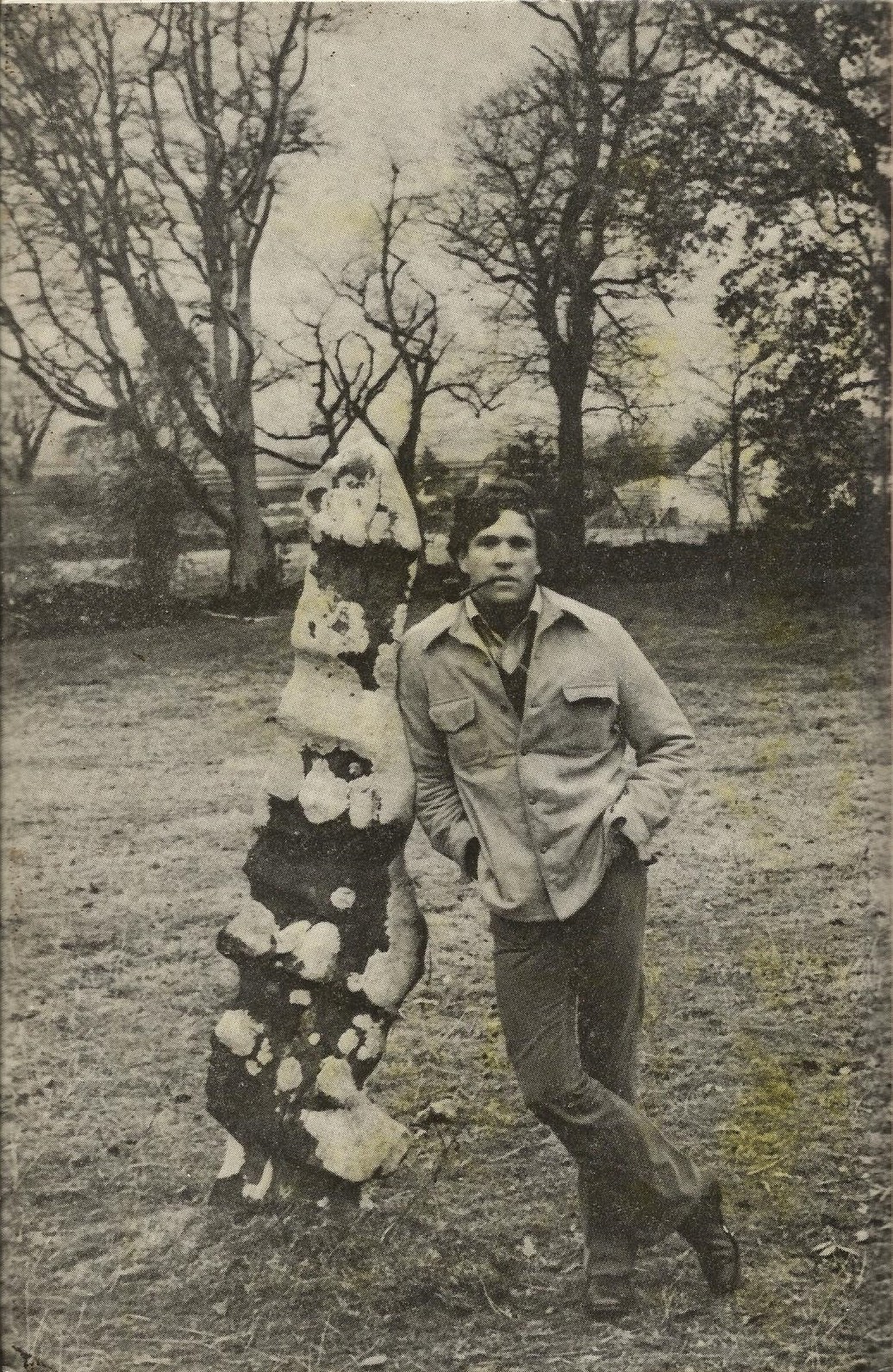
If asked to imagine a novel written by the inventor of Paintball, the average person in the street could be forgiven for imagining a bad one.  Dangler, however, is actually pretty decent.  A product of the seventies crisis of masculinity that brought you Deliverance and Straw Dogs, it tells of a outdoor activity park manager who attempts to make his elite clientele regain their sense of innate superiority over the lower orders through gruelling wilderness exercises.  Needless to say, it all goes wrong.  The novel sags in the middle when, just when you expect it to go full-on crazy, it instead descends into soapiness and some tedious sub-plot about tax.  By the end, however, it's all rather gripping.  Let us now enjoy Charles Gaines's author photo.


Tuesday, 18 February 2014

Lost Book Library Reading Round-Up no. 14

The penultimate round-up of the Great Lost Book Library Reading Backlog.

Game in Heaven With Tussy Marx by Piers Paul Read

Status: Abandoned p. 24

This opened with an intriguing premise of a conversation in the afterlife involving Karl Marx's daughter, but soon moved on to the class-obsessed seduction story material that bored me in the last novel by Read I tried to read.  I'm sure what he's doing is lovely, but it's not for me.


Harris in Wonderland by Philip Reid

Status: Completed

As you'd expect in a detective novel written under a pseudonym by two Private Eye staffers, here the establishment is corrupt, while those angry enough about it to get radical are figures of fun.  The moral ideal to be aimed for here is, naturally, that embodied by the socially conservative investigative journalist.  The story is sometimes engaging, sometimes not, but there's a good courtroom scene and a decent twist, as well as some enjoyable counter-cultural stuff if you like that sort of thing.

The Bender by Paul Scott

Status: Abandoned p. 26

Very well-written early work by The Jewel in the Crown-meister.  Nothing particularly wrong with it, but I'm getting weighed down by the sheer number of class angst post-war novels I'm having to wade through.  The plot hung on some gubbins about an inheritance and a debt I couldn't get my head round, and accountancy-based stories just aren't my thing.  You should definitely read it, though.  It's probably brilliant.

Seventeen Part One by Soya

Status: Completed

The Lost Book Library is amply stocked with recollections of teenage sexual encounters which are definitely those of a fictional character and not the author.  I was determined to finally get through one of these, despite the fact the psychological reaction they trigger is not dissimilar to that experienced by Springfield when Principal Skinner announced he was a virgin.  This one, by renowned Danish novelist Carl Erik Soya and set just before WWI, is actually good stuff.  It's more a novel about adolescence, despite the sexy packaging, and by the end of Part One, the protagonist still hasn't got his end away. (He doesn't even get to first base) It does, however, detail a boy on the verge of adulthood trying to make sense of the world he is about to enter very well.  It's also an example of the past being a foreign country, with everyone only having a bath once every fortnight and children playing with toys well into their teens.  Having said that, apparently blackheads were an issue even back then.

The Marriage of a Young Stockbroker by Charles Webb

Status: Completed

Despite being reissued as a classic every decade or so, I didn't think Webb's The Graduate was much cop.  The inarticulacy of its protagonist seemed unlikely and dishonest.  Here, in Webb's third novel, the young stockbroker of the title is refreshingly vocal, and we actually get to know what his problem is as his marriage disintegrates under the weight of his voyeurism and the tactics of his interfering sister-in-law.  Although his wife does irritatingly display some Benjamin-esque vagueness, this is overall a much more satisfying book than The Graduate, although less high-concept.  The dialogue crackles, and Webb's standard film treatment-style is juxtaposed with some fine interior monologues as the protagonist recalls a visit to a now very tame-sounding porn cinema.  A strong entry in the suburban ennui genre.

Tuesday, 31 December 2013

Lost Book Library Reading Round-Up no. 13

Another round-up of these things.

The Season of the Witch by James Lee Herlihy

Status: Abandoned p. 55

I really wanted this, by noted author of Midnight Cowboy Herlihy, to be good, but it's just not.  I haven't read Cowboy, but as a concept it's brilliant, due to the contrast between the down-home cowboy and his New York environment, and the gap between what he thinks he'll end up doing and what he actually has to do.  Here, a suburban hippy teen goes to New York, accompanied by a gay friend hiding from the draft board (which I found odd as I thought pretending to be gay was considered an excellent way of avoiding the draft) and this is less interesting as a story than Cowboy, as she's exactly the sort of person you'd expect to be clogging up the East Village in the early '70s.  As for the main character of 'Witch', she is the most annoying, selfish, manipulative, control-freak masquerading as a free spirit you could ever hope to avoid meeting.  Now this is fine in itself, but I wasn't convinced Herlihy knew how unpleasant his protagonist was.  Anyway, there was no sign of a plot in sight, and with only an idiot for company, and the dreaded journal device employed, I decided this wasn't my scene.

Beat On a Damask Drum by Troy Kennedy Martin

Status: Abandoned p. 31

This early Vietnam War novel from 1959 is intriguing, in that it prefigures the central premise of Apocalypse Now, only with Martin Sheen as an attractive Hollywood movie actress and Marlon Brando as her childhood friend.  Also interesting is the way so many of the themes of later Vietnam stories are present - that this is a war like no other, with the Westerners struggling to get to grips with guerilla warfare and a sense that they have stumbled into something truly alien and un-graspable.  Also un-graspable, however, were the the interactions between the characters.  A French general seems weirdly interested in dictating exactly what sort of drink the actress can have with her meal.  Apparently aroused by this control freakery, and despite of there being no obvious sexual attraction between the two, she then sleeps with him.  Someone more interested in war novels than me should definitely read this, however, because there's something worth exploring here.

Downstairs at Ramsey's by James Leigh

Status: Completed

I didn't have high hopes for this, as quite frankly it looked fucking dreadful, but to my surprise it turned out to be one of the best books I've found in the Lost Book Library so far, and on the quality/obscurity graph it scores very highly indeed.  A retired thespian rents the downstairs of his Los Angeles home to a pair of swinging sixties bachelors who unexpectedly become legal guardians of a fourteen year old girl.  She has large breasts and so it all goes wrong.  The situation is depicted in a surprisingly un-lecherous manner, while Leigh's smooth prose goes down like a banana milkshake.  It's not a perfect novel - it hangs about at the end when it really needs a definite conclusion - and I wasn't entirely convinced by all the reactions to the girl's burgeoning sexuality. (Having said that, the Savile business has demonstrated that there were some very strange ideas about sex with minors floating about in the wake of the sexual revolution which we all had to have cultural amnesia about for several decades in order to stop us from going collectively mad.)  Nevertheless, it's a sparkling piece of work, and Leigh can really write, so it's a mystery why he has left so little of a trail.
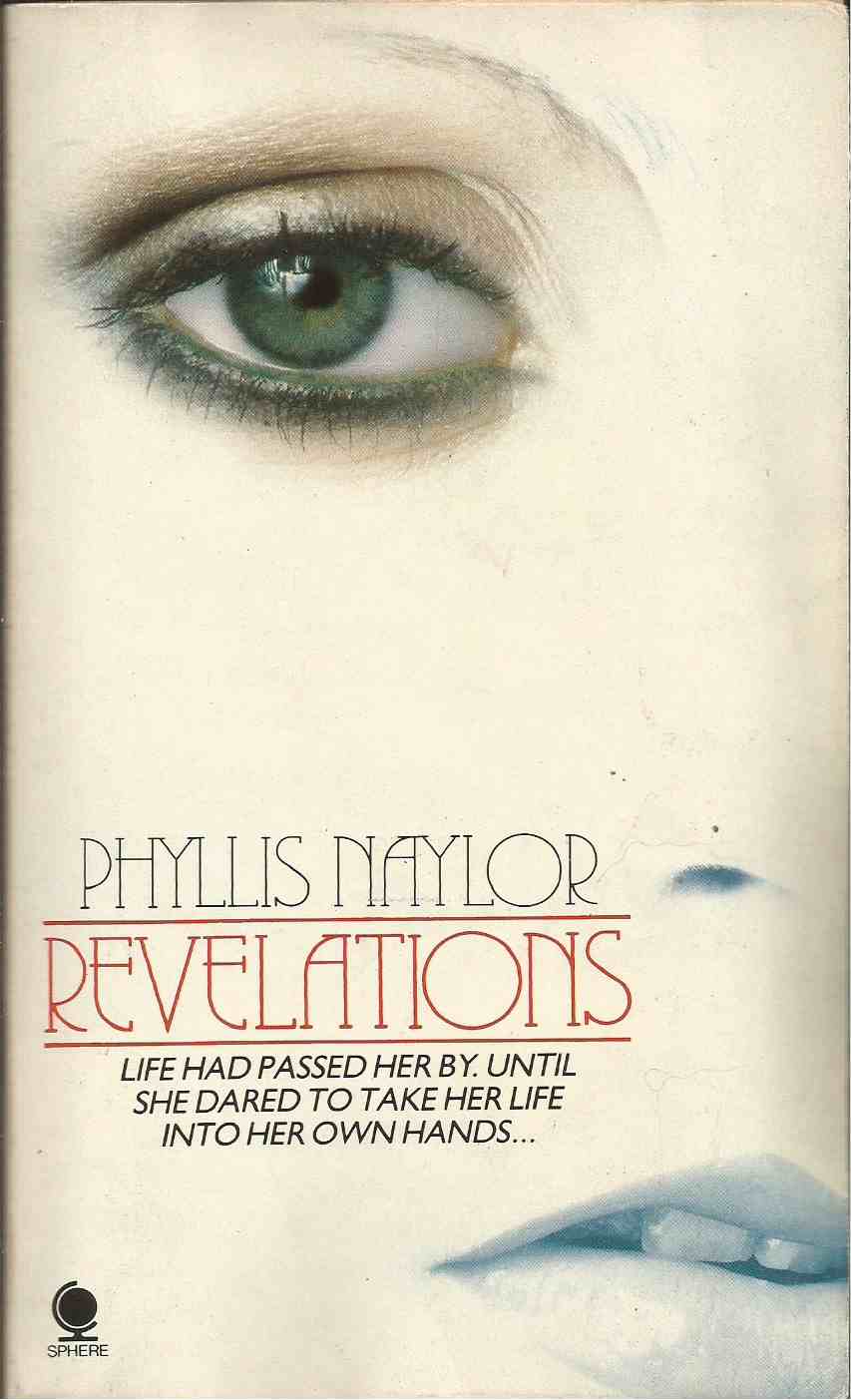
Revelations by Phyllis Naylor

Status: Completed

A woman belonging to a fundamentalist church becomes the guardian of her deceased free-spirit brother's son (which makes it the second Lost Book in a row to begin with an unexpected guardianship).  Her nephew makes her question her faith, and soon she is breaking free of her church's strict teachings.  At first, the depiction of her repression seems a bit heavy-handed, and her likely way out of it somewhat predictable.  Soon, however, there are some serious curveballs being thrown in there, and the way in which her sexuality manifests itself is a big whoah! moment.  Written in the 'invisible' style that creative writing teachers the world over assure us is the best of all possible styles, this is a good, solid novel that you wouldn't really want to be better.

See the Kid Run by Bob Ottum

Status: Abandoned p. 98

This pulpy tale of knife-wielding New York wrong'uns started out magnificently, with a range of remarkable characters - a teenage thief who knows how to make himself invisible, his exploitative social worker trying to use him as material for her doctorate, a bin-scavenging woman armed with an imaginary icepick - but the whole thing is torpedoed by a ludicrously violent police officer, whose assault on an eleven year-old career criminal makes any suspension of disbelief impossible.  He's simply the wrong character for this story.  A shame, because stylistically and imaginatively, this was joyfully unusual.


Wednesday, 16 October 2013

Lost Book Library Reading Round-Up no. 12

Yet another reading round-up.  Backlog slowly but surely getting unclogged...

Body Charge by Hunter Davies

Status: Completed

Not so much a good book, more a curious one.  A sexually fluid football-playing minicab driver becomes involved in the lives of his clients, particularly those who are or might well be gay.  It takes him a while to really get stuck in, however, which is excellent practice for a minicab driver, but doesn't make for great storytelling.  Then, when he does, the plot flails in all directions with a murder and a SPOILER ALERT surprise wife thrown in near the end.  This novel is more interesting as social history, with skinheads, football hooligans and '70s attitudes to unemployment bobbing about in it.  Also, the capturing of the parklife of the time, with enthusiasts spontaneously grouping to play sports or engage in hobbies like model boating in a way they don't today, is fascinating.  Read while listening to Badfinger and contemplating James Bolam's face.

The Satyr by Robert DeMaria

Status: Abandoned p. 52

Another entry into the Lost Book sub-genre of the literary sexual confessional, in which a character who is definitely made-up and not the author recounts his experiences, usually involving a lot of precocity and a side-helping of Freudian mother-love/hate.  Generally written in the '60s or '70s by serious authors, but nevertheless packaged as soft porn.  This one comes with an introduction by Anthony Burgess, who thinks DeMaria is brilliant.  Bearing in mind Burgess didn't like his own A Clockwork Orange, we might guess his judgement is a bit off.  And it is.  This novel is perfectly well written, but it just lacks the charm needed to make you want to hang around a story like this much.  There's some main plot where the protagonist wants to kill his mother, but summoning up the energy to care whether he does or not is nigh-on impossible.  I'm generally against the book club criticism of the main character being unsympathetic, but in this case... the main character is unsympathetic, and it stops the story from working.  Essentially, a seemingly nice guy wanting to do something horrible is a story.  Someone unpleasant wanting to do the same, not so much.

The Dolly Dolly Spy by Adam Diment

Status: Abandoned p. 22

Imagine if James Bond was less a weird sadist and more just a bit of a knob, and you'd pretty much have Diment's hero Philip McAlpine.  Although he's meant to be a groovy spy, by 1967 he's totally square, dissing teenagers, hippies, rock music and Top of the Pops.  Other people still read these books occasionally, which means I don't have to.


Another Part of the House by Winston M. Estes

Status: Completed

Overall, a very fine slice of Americana from a pretty much-forgotten writer.  A ten year-old boy grows up in a small Texan town during the Depression, and we encounter the various town characters as they struggle, waiting for the New Deal to kick in.  Annoyingly, there's a plot flaw that left me feeling underwhelmed at the end (a confrontation that really needs to happen doesn't) but along the way, it's a warm, poignant portrait of a community, with a segment featuring a death in the family and its aftermath a particular stand-out.

Such Good Friends by Lois Gould

Status: Abandoned p. 51

This story of a dry-witted New Yorker whose husband goes into a coma seemed perfectly good until I hit a plot point I just couldn't get my head around.  The doctor instructs her to phone up all her friends and get them to donate blood in order to save him.  It ought to be Type O Positive, but it's not essential.  This struck me as a bit strange.  Surely the doctor's first port of call would be the blood bank?  And wouldn't it absolutely have to be the right type of blood?  After all, that's the point of having blood types in the first place.  I don't know, maybe in '70s New York, blood of varying types was regularly drained from friends and pumped into people, but it doesn't sound right to me.  Anyway, I couldn't get past the sheer weirdness of this scenario and bailed.


Monday, 2 September 2013

Lost Book Library Reading Round-Up no. 11


From bumper crop to crop o' shit.

Gorgonzola, Won't You Please Come Home? by Clyde Ames


Status: Abandoned p. 54

In the '60s, spy spoofs in TV and film were seemingly as numerous as proper spy stories.  By the '80s, out of context, they made no sense at all, but nevertheless cluttered up my childhood with their camp incoherence.  This novel is the written equivalent of these films and TV shows.  A spy with the name of Al Fresco seeks to combat the international pirate Eva De Struction.  Despite the terrible pun names, it's not without wit ('The three poodles wagged their tails and thought their deep poodle thoughts'), but if you strip it down, it's pretty much just saying 'pretty ladies got boobies' over and over again.  Somewhere between the scenes in Casino Royale that have Woody Allen in and the the ones that don't.

Virgin Planet by Poul Anderson

Status: Abandoned p. 25

A planet becomes populated entirely by women after a single-sex colonial spaceship crash-lands (Men and women, on the same spaceship?  That's just madness!).  Couldn't really be bothered with this as I generally don't like sci-fi where you have to familiarise yourself with a whole other society, and anyway, it's not a proper lost book.  So, moving on...


Confessions of a Spent Youth by Vance Bourjaily

Status: Abandoned p. 40

Curious one this.  Narrator who is definitely a fictional character and not the author recounts his sexual exploits.  You'd think with it's professed theme, it would be aimed squarely at the wanking market, but there's a lot of well-written padding, and therefore veers into fictional memoir territory.  Maybe it's for masturbators who enjoy a well-crafted paragraph.  Anyway, at 500 pages it's way too long and not a promising enough idea for me to be bothering with.


The Fun House by William Brinkley

Status: Abandoned p. 32

Satirical look at a New York picture magazine.  There's a nice Mad Men vibe to it all, and the situations are reasonably interesting, but there's no story to speak of, more a bunch of anecdotes, and at over 400 pages, again, it just doesn't justify the commitment.  Dropped out at the point the narrator goes off on one about how career women weren't satisfactorily feminine.  Which brings us to...


A Woman in Space by Sara Cavanaugh

Status: Abandoned p. 34

A female astronaut encounters resistance from her fellow space explorers at a level that goes beyond mere sexism and into some sort of mental disorder.  Initially very amusing, as the opening chapter contains gems of paragraphs like:
'General Jameson, who had been one of the pioneers of the initial man on the moon programs, had been placed in charge of the moon base project.  His orders - establish a base on the moon!  His budget - unlimited.  Time factor - full speed ahead .  His objective - beat the Russians who were considering the same goal.  A moon base.'
Ultimately, the one-noteness of it all gets wearisome, but if you want to read an account of the battle for acceptance in the workplace by women transposed into space, then this is definitely the book for you.