Tuesday, 31 December 2013

Lost Book Library Reading Round-Up no. 13

Another round-up of these things.

The Season of the Witch by James Lee Herlihy

Status: Abandoned p. 55

I really wanted this, by noted author of Midnight Cowboy Herlihy, to be good, but it's just not.  I haven't read Cowboy, but as a concept it's brilliant, due to the contrast between the down-home cowboy and his New York environment, and the gap between what he thinks he'll end up doing and what he actually has to do.  Here, a suburban hippy teen goes to New York, accompanied by a gay friend hiding from the draft board (which I found odd as I thought pretending to be gay was considered an excellent way of avoiding the draft) and this is less interesting as a story than Cowboy, as she's exactly the sort of person you'd expect to be clogging up the East Village in the early '70s.  As for the main character of 'Witch', she is the most annoying, selfish, manipulative, control-freak masquerading as a free spirit you could ever hope to avoid meeting.  Now this is fine in itself, but I wasn't convinced Herlihy knew how unpleasant his protagonist was.  Anyway, there was no sign of a plot in sight, and with only an idiot for company, and the dreaded journal device employed, I decided this wasn't my scene.

Beat On a Damask Drum by Troy Kennedy Martin

Status: Abandoned p. 31

This early Vietnam War novel from 1959 is intriguing, in that it prefigures the central premise of Apocalypse Now, only with Martin Sheen as an attractive Hollywood movie actress and Marlon Brando as her childhood friend.  Also interesting is the way so many of the themes of later Vietnam stories are present - that this is a war like no other, with the Westerners struggling to get to grips with guerilla warfare and a sense that they have stumbled into something truly alien and un-graspable.  Also un-graspable, however, were the the interactions between the characters.  A French general seems weirdly interested in dictating exactly what sort of drink the actress can have with her meal.  Apparently aroused by this control freakery, and despite of there being no obvious sexual attraction between the two, she then sleeps with him.  Someone more interested in war novels than me should definitely read this, however, because there's something worth exploring here.

Downstairs at Ramsey's by James Leigh

Status: Completed

I didn't have high hopes for this, as quite frankly it looked fucking dreadful, but to my surprise it turned out to be one of the best books I've found in the Lost Book Library so far, and on the quality/obscurity graph it scores very highly indeed.  A retired thespian rents the downstairs of his Los Angeles home to a pair of swinging sixties bachelors who unexpectedly become legal guardians of a fourteen year old girl.  She has large breasts and so it all goes wrong.  The situation is depicted in a surprisingly un-lecherous manner, while Leigh's smooth prose goes down like a banana milkshake.  It's not a perfect novel - it hangs about at the end when it really needs a definite conclusion - and I wasn't entirely convinced by all the reactions to the girl's burgeoning sexuality. (Having said that, the Savile business has demonstrated that there were some very strange ideas about sex with minors floating about in the wake of the sexual revolution which we all had to have cultural amnesia about for several decades in order to stop us from going collectively mad.)  Nevertheless, it's a sparkling piece of work, and Leigh can really write, so it's a mystery why he has left so little of a trail.
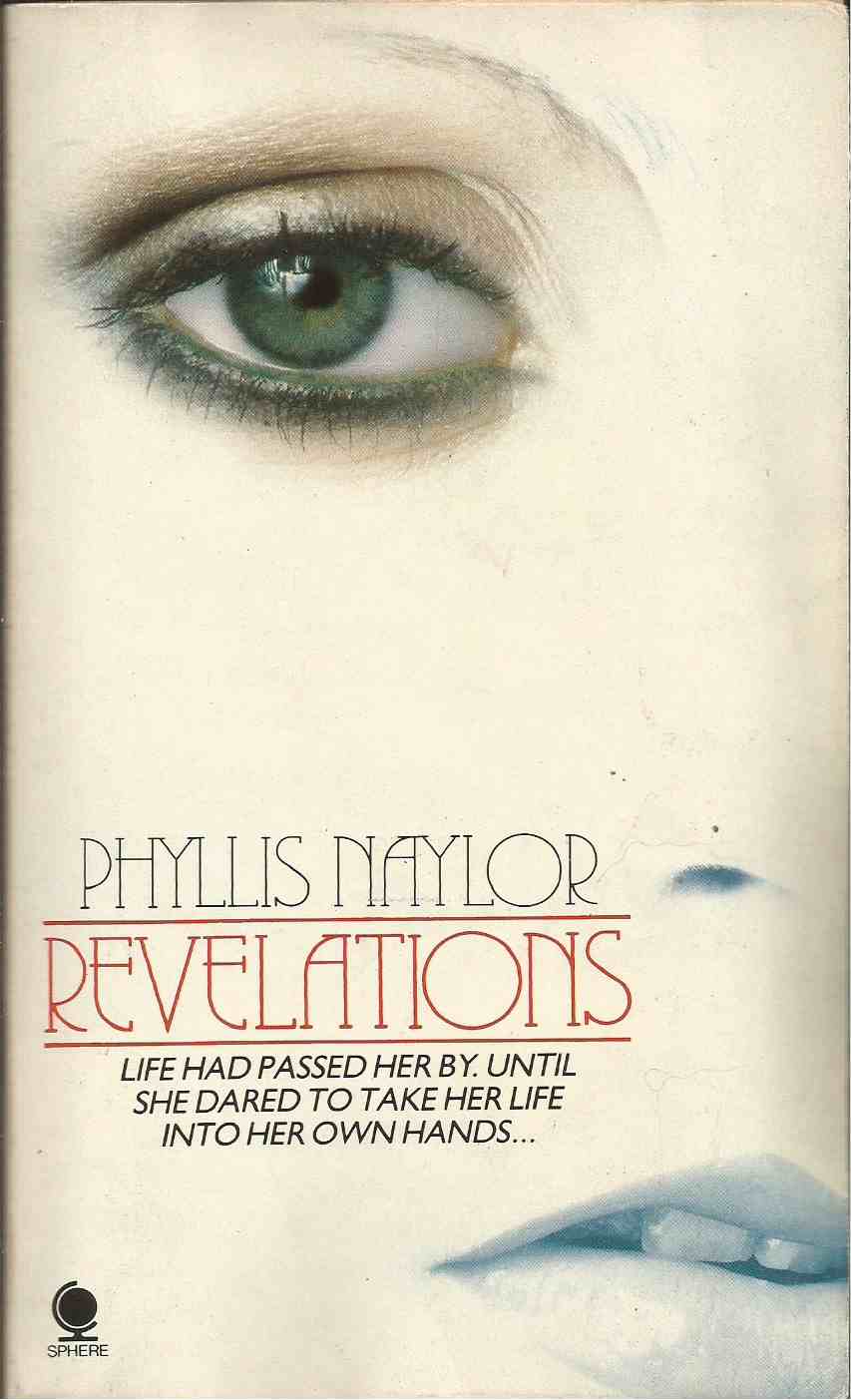
Revelations by Phyllis Naylor

Status: Completed

A woman belonging to a fundamentalist church becomes the guardian of her deceased free-spirit brother's son (which makes it the second Lost Book in a row to begin with an unexpected guardianship).  Her nephew makes her question her faith, and soon she is breaking free of her church's strict teachings.  At first, the depiction of her repression seems a bit heavy-handed, and her likely way out of it somewhat predictable.  Soon, however, there are some serious curveballs being thrown in there, and the way in which her sexuality manifests itself is a big whoah! moment.  Written in the 'invisible' style that creative writing teachers the world over assure us is the best of all possible styles, this is a good, solid novel that you wouldn't really want to be better.

See the Kid Run by Bob Ottum

Status: Abandoned p. 98

This pulpy tale of knife-wielding New York wrong'uns started out magnificently, with a range of remarkable characters - a teenage thief who knows how to make himself invisible, his exploitative social worker trying to use him as material for her doctorate, a bin-scavenging woman armed with an imaginary icepick - but the whole thing is torpedoed by a ludicrously violent police officer, whose assault on an eleven year-old career criminal makes any suspension of disbelief impossible.  He's simply the wrong character for this story.  A shame, because stylistically and imaginatively, this was joyfully unusual.


Wednesday, 16 October 2013

Lost Book Library Reading Round-Up no. 12

Yet another reading round-up.  Backlog slowly but surely getting unclogged...

Body Charge by Hunter Davies

Status: Completed

Not so much a good book, more a curious one.  A sexually fluid football-playing minicab driver becomes involved in the lives of his clients, particularly those who are or might well be gay.  It takes him a while to really get stuck in, however, which is excellent practice for a minicab driver, but doesn't make for great storytelling.  Then, when he does, the plot flails in all directions with a murder and a SPOILER ALERT surprise wife thrown in near the end.  This novel is more interesting as social history, with skinheads, football hooligans and '70s attitudes to unemployment bobbing about in it.  Also, the capturing of the parklife of the time, with enthusiasts spontaneously grouping to play sports or engage in hobbies like model boating in a way they don't today, is fascinating.  Read while listening to Badfinger and contemplating James Bolam's face.

The Satyr by Robert DeMaria

Status: Abandoned p. 52

Another entry into the Lost Book sub-genre of the literary sexual confessional, in which a character who is definitely made-up and not the author recounts his experiences, usually involving a lot of precocity and a side-helping of Freudian mother-love/hate.  Generally written in the '60s or '70s by serious authors, but nevertheless packaged as soft porn.  This one comes with an introduction by Anthony Burgess, who thinks DeMaria is brilliant.  Bearing in mind Burgess didn't like his own A Clockwork Orange, we might guess his judgement is a bit off.  And it is.  This novel is perfectly well written, but it just lacks the charm needed to make you want to hang around a story like this much.  There's some main plot where the protagonist wants to kill his mother, but summoning up the energy to care whether he does or not is nigh-on impossible.  I'm generally against the book club criticism of the main character being unsympathetic, but in this case... the main character is unsympathetic, and it stops the story from working.  Essentially, a seemingly nice guy wanting to do something horrible is a story.  Someone unpleasant wanting to do the same, not so much.

The Dolly Dolly Spy by Adam Diment

Status: Abandoned p. 22

Imagine if James Bond was less a weird sadist and more just a bit of a knob, and you'd pretty much have Diment's hero Philip McAlpine.  Although he's meant to be a groovy spy, by 1967 he's totally square, dissing teenagers, hippies, rock music and Top of the Pops.  Other people still read these books occasionally, which means I don't have to.


Another Part of the House by Winston M. Estes

Status: Completed

Overall, a very fine slice of Americana from a pretty much-forgotten writer.  A ten year-old boy grows up in a small Texan town during the Depression, and we encounter the various town characters as they struggle, waiting for the New Deal to kick in.  Annoyingly, there's a plot flaw that left me feeling underwhelmed at the end (a confrontation that really needs to happen doesn't) but along the way, it's a warm, poignant portrait of a community, with a segment featuring a death in the family and its aftermath a particular stand-out.

Such Good Friends by Lois Gould

Status: Abandoned p. 51

This story of a dry-witted New Yorker whose husband goes into a coma seemed perfectly good until I hit a plot point I just couldn't get my head around.  The doctor instructs her to phone up all her friends and get them to donate blood in order to save him.  It ought to be Type O Positive, but it's not essential.  This struck me as a bit strange.  Surely the doctor's first port of call would be the blood bank?  And wouldn't it absolutely have to be the right type of blood?  After all, that's the point of having blood types in the first place.  I don't know, maybe in '70s New York, blood of varying types was regularly drained from friends and pumped into people, but it doesn't sound right to me.  Anyway, I couldn't get past the sheer weirdness of this scenario and bailed.


Monday, 2 September 2013

Lost Book Library Reading Round-Up no. 11


From bumper crop to crop o' shit.

Gorgonzola, Won't You Please Come Home? by Clyde Ames


Status: Abandoned p. 54

In the '60s, spy spoofs in TV and film were seemingly as numerous as proper spy stories.  By the '80s, out of context, they made no sense at all, but nevertheless cluttered up my childhood with their camp incoherence.  This novel is the written equivalent of these films and TV shows.  A spy with the name of Al Fresco seeks to combat the international pirate Eva De Struction.  Despite the terrible pun names, it's not without wit ('The three poodles wagged their tails and thought their deep poodle thoughts'), but if you strip it down, it's pretty much just saying 'pretty ladies got boobies' over and over again.  Somewhere between the scenes in Casino Royale that have Woody Allen in and the the ones that don't.

Virgin Planet by Poul Anderson

Status: Abandoned p. 25

A planet becomes populated entirely by women after a single-sex colonial spaceship crash-lands (Men and women, on the same spaceship?  That's just madness!).  Couldn't really be bothered with this as I generally don't like sci-fi where you have to familiarise yourself with a whole other society, and anyway, it's not a proper lost book.  So, moving on...


Confessions of a Spent Youth by Vance Bourjaily

Status: Abandoned p. 40

Curious one this.  Narrator who is definitely a fictional character and not the author recounts his sexual exploits.  You'd think with it's professed theme, it would be aimed squarely at the wanking market, but there's a lot of well-written padding, and therefore veers into fictional memoir territory.  Maybe it's for masturbators who enjoy a well-crafted paragraph.  Anyway, at 500 pages it's way too long and not a promising enough idea for me to be bothering with.


The Fun House by William Brinkley

Status: Abandoned p. 32

Satirical look at a New York picture magazine.  There's a nice Mad Men vibe to it all, and the situations are reasonably interesting, but there's no story to speak of, more a bunch of anecdotes, and at over 400 pages, again, it just doesn't justify the commitment.  Dropped out at the point the narrator goes off on one about how career women weren't satisfactorily feminine.  Which brings us to...


A Woman in Space by Sara Cavanaugh

Status: Abandoned p. 34

A female astronaut encounters resistance from her fellow space explorers at a level that goes beyond mere sexism and into some sort of mental disorder.  Initially very amusing, as the opening chapter contains gems of paragraphs like:
'General Jameson, who had been one of the pioneers of the initial man on the moon programs, had been placed in charge of the moon base project.  His orders - establish a base on the moon!  His budget - unlimited.  Time factor - full speed ahead .  His objective - beat the Russians who were considering the same goal.  A moon base.'
Ultimately, the one-noteness of it all gets wearisome, but if you want to read an account of the battle for acceptance in the workplace by women transposed into space, then this is definitely the book for you.


Friday, 16 August 2013

Lost Book Library Reading Round-Up no. 10

A bumper crop this time round!

Lamia by Tristan Travis

Status: Completed

Lengthy supernatural police procedural by the enigmatic Tristan Travis - thought by some to be a pseudonym by Ken Kesey, who provided the back cover blurb.  How likely is this?  I would certainly consider it a possibility.  While maybe not the most obvious novel you might imagine Kesey writing after he took some mind-blowing drugs, got driven around in a camper van by the On the Road guy and kick-started flower power, it certainly has a similar feel to the equally meandering Sometimes a Great Notion.  It's easy to forget that Kesey the novelist and Kesey the cultural icon are two very different things.  There's an eye for detail here that is the equal to Kesey's (if you read ...Notion, it's evident that he was a guy who really knew his logging).  Even if it's not by Kesey, it feels like he's covering up for somebody talented, albeit someone not necessarily firing on all cylinders.  There's an assuredness to the style that it just wouldn't make sense for someone to develop, utilise for just one novel, and then disappear into the ether.
   But is it any good?  Yes and no.  Chapter by chapter it's perfectly entertaining, and I was happy to read all of it.  Many of the scenes are startling, original and quite freaky.  There's a lengthy flashback that's a prime slice of American Gothic, and could be sliced off and presented as a work in its own right.  As a whole however, it doesn't add up.  A key character remains a blank throughout.  If they were filled in, I could see the novel operating on a whole other level.  Meanwhile, there's a snickering attitude to the female anatomy which is adolescent and plain unpleasant at times.  The ending is so frustrating it made me think about Neil LaBute's Wicker Man remake, and o one should ever be made to think about that.  An enigmatic book, then, which would probably be an intriguing footnote in literary history, regularly visited, if it were just that bit, well, better.

Hurry On Down by John Wain

Status: Completed

The first of three books I acquired by semi-forgotten '50s/'60s author Wain.  I had high hopes that this story of a privately educated young man seeking to escape the class system would be the LBL Holy Grail of a genuinely great lost book.  It's not, although it is interesting.  As the back cover blurb says, it does point the way forward to Amis, Murdoch and the Kitchen Sink school, but crucially doesn't make the leap itself.  It starts off very well, and is funny, and there are some great scenes as the protagonist goes from job to job trying to find a place for himself.  There's a particularly good bit when he gets a job writing radio comedy.  It also, however, falls into the regular Lost Book trap of being too picaresque, with situations abandoned rather than resolved.  As is also often the case in the Lost Book Library, the female characters are woeful, with a particularly tiresome chapter in which our hero struggles to come to terms with the 'sluttishness' of a girl he's not even involved with.  Both Wain and his character know the world is changing, but neither of them appear to have any clue of where it might be heading.

A Smaller Sky by John Wain

Status: Completed

This later novel by Wain is very different.  It has a structure and everything.  A scientist leaves his job and family to spend his days on Paddington Station.  It's a very Laing-ian version of mental illness, with madness a sane reaction to an insane world.  The scenes in which the scientist fights to maintain his place on the station are powerful, with him having to fake various scenarios in order to justify his presence, before having to jump from a moving train.  Less successful, however, is a subplot involving a nefarious TV presenter infiltrating his family in the hope of a scoop.  Here, Wain's complete inability to create a believable female character lets him down again, culminating in a scene where the wife lets a relative stranger tell her to deal with her upset over a missing child by going into the kitchen and doing some baking.  Even with relations between the sexes being different back then, I'm pretty sure that would still have earned you a slap.  A partially successful novel.

Death of the Hind Legs and Other Stories by John Wain

Status: Completed

Turns out that while Wain has his flaws as a novelist, as a miniaturist he is quite brilliant.  A man talks his reluctant brother-in-law into becoming a wrestler.  A childhood home is returned to only to be found to be fitted with modernist decor. A retired engine driver visits his old engine.  A female journalist discovers that 'We Are All Prostitutes'.  The back half of a pantomime horse dies on stage.  Beautiful, sad little moments, realised with a perfect sense of timing.  I suppose I could pick holes in some of them, but I don't feel like it really.  A very strong collection, and a highlight of the Library so far.

The Passage by Victor Wartofsky

Fun pulpy afterlife nonsense.  A journalist with the depth of tissue paper loses his wife and daughter in an accident and gets mixed up in a world of organ transplants, psychics, skeptics and paranormal research.  I wouldn't say it gave you much insight into the human condition, and there are some plot turns that will make you go 'eh?' but it's surprisingly well-researched and there's a passage about what the consequences might be of proving the existence of the soul which is astute.  If you enjoy ridiculous things from over thirty years ago then you'll enjoy this.

Tuesday, 16 April 2013

Lost Book Library Reading Round-Up no. 9

The Memory of Eva Ryker by Donald A. Stanwood

Status: Abandoned, p. 132

I was disappointed by this Titanic-themed mystery thriller, as it looked like the best novel ever written by anyone ever.  After over a hundred pages of the hero improbably jetting all over the globe to the point of silliness and casually hitting a woman in the face very hard along the way, I decided to call it a day.  It's not all bad, however.  The cover has a peephole in it, and there's actually an inner cover underneath.  Do you want to see it?  Of course you do.


Emu and Little Red Riding Hood by Michael Sullivan

Status: Completed

Not much to say about this basic retelling of the Little Red Riding Hood story with Emu (but disappointingly, not Rod Hull) shoehorned in, except that it contains this extraordinary picture by artist Elphin Lloyd-Jones:


The Caretakers by Dariel Telfer

Status: Abandoned, p. 54

This was actually pretty decent, and I only abandoned it because it was very long, I'd got the gist, and life is short.  A fictionalized account of a working life in a mental hospital from the early '60s, it shows a disturbing world that has only very shortly departed, with trainee staff terrified of the patients they are sent to treat simply because they are mentally ill.  The book posits the then-radical notion that the patients are just normal people who just happen to be sick and deserve to be treated with dignity.  It could be argued that it tries to have its cake and eat it, in the manner of Tod Browning's Freaks, with the case studies presented both for our understanding and our titillation.  Nevertheless, it's a brave work for the time, and should certainly be read by anyone with an interest in changing attitudes to mental health.

A Garden of Sand by Earl Thompson

Status: Completed

I've expressed my admiration for this book earlier, and recommended you all go out and buy it.  That some of you may not have done so fills my heart with sadness.  Meanwhile, here's Earl Thompson's impressive author pic.


The Grounding of Group 6 by Julian F. Thompson

Status: Completed

Very enjoyable '80s teen lit about a sinister boarding school and its unorthodox way of dealing with problem students.  Can't say too much about it without giving away the big twist (which I think I already did last time I mentioned it but anyway).  Although something of a sensation in the US at the time, it's not so well-remembered over in the UK.  This is probably because it is rooted in the banal truths of American high-school life, rather than the mythic version we lap up so voraciously, and so feels a bit alien.  Nevertheless, it's a great premise leading to a strong story, enthusiastically told.  Anybody interested in the growth of the YA genre should check out this landmark title.

Tuesday, 19 March 2013

Lost Book Library Reading Round-Up no. 8

Another round-up of my attempts to actually read these freaks of literary nature.

Jessica's Wife by Hester Mundis

Status: Abandoned p. 35

This story of seventies sexual experimentation from Joan Rivers's writing partner had the pedigree to be genuinely good, but Mundis is all to ready to sacrifice the integrity of the world she creates for the sake of a joke, much the same way that Judd Apatow does, only you feel less inclined to forgive her.  Consequently, characterisation is all over the place.  Most of the jokes seem to stem from the fact various minority groups want equality, which seems to me quite reasonable.  Not a keeper.

Have a Nice Day by Barry Norman

Status: Completed

I'll be frank, I didn't have great hopes for this book, but it turned out to be a perfectly enjoyable comic novel - probably as good as Money by Martin Amis.  Norman sticks to writing about what he knows - Hollywood, making TV programmes and LA prostitutes - and comes up with a good range of enjoyable grotesques.  Although Norman's approach to depicting ethnic and sexual difference perhaps hasn't quite stood the test of time, it is enjoyable to imagine him sitting at his typewriter and hammering out the line 'Hey my man! Gimme some skin!'.  It's worth bearing in mind that Bazza, the Bazzinator, Crystal Tips and Bazzastair, went on to write a thriller that was praised by Elmore Leonard, so underestimate him at your peril.

The Harrad Experiment by Robert R. Rimmer

Status: Abandoned p. 36

An academic sets up a programme which allows him to scientifically mess about in his students' sex lives.  Essentially a novel that asks what if someone did a thing that no one is ever going to get away with actually doing.  I can see why the book attracted such a large readership in the sixties, but as literature it's not that great, with clunky characters and unfeasible motivations, and following the dreaded journal format. (Novelists!  You're allowed just to tell a story.  You don't need to justify the existence of the text.  That's why there are such things as novels.) There are enough people talking about this book online already for me to not bother with it.

The Reproductive System by John Sladek

Status: Abandoned p. 92

I was surprised to find myself given up on this rather acclaimed satirical sci-fi novel, but it was just winding me up a bit.  The sci-fi element of self-replicating metal boxes was a joy to read, but the Catch-22-style military humour simply didn't strike me as that funny.  And with each minor character coming with their own 'hilarious' back-story, my patience was tested beyond breaking point.

A Sunset Touch by Howard Spring

Status: Completed

This post-war novel of a shy man obsessed with his own Cornish ancestry discovering sex and love is a classic Lost Book mix of great passages, acute observation, and occasional narrative incoherence.  There's a real spookiness to some scenes involving an ancient vicar, and the treatment of casual pre-marital sex is fascinating as social history.  The plot, meanwhile, hangs from some quite magnificent coincidences and leaps into sheer randomness, to the point that for the first time in my life I found myself laughing at the words 'cancer of the right lung'.  Halfway through there is a bizarre attack on the state funding of art and drama students.

Monday, 28 January 2013

Lost Book Library Reading Round-Up no. 7

I've decided the gap between books featured and books actually read is getting excessive, so I'll be concentrating on reading round-ups for a bit.

Villains We Have Known by Reg Kray

Status: Abandoned, p. 22

I don't want to dwell on this too much, as being the only book in the Lost Book Library so far written by an obvious sociopath it is utterly unpleasant.  It does, however, contain sentences like these: 'His cue to life seemed to be his zest for living, which he achieved to the full before the door of death finally turned its key on him.' And  'It seemed theirs was a classic example of the epitome of life's seesaw of sorrow and joy.'

Juan In America by Eric Linklater

Status: Completed

This novel was a smash in the 30s, but has since petered out of public consciousness.  The protagonist is a descendent of Byron's Don Juan, making his way in a picaresque manner across the USA.  I was expecting quite a lot of sex because of this, but despite a lengthy preamble explaining his lineage, this Juan doesn't actually get up to much naughtiness.  In fact, the book could easily be called 'Some Bloke In America' and it would pretty much capture the contents just as well.   Occasionally brilliant, with some comically dazzling scenes such as a play in which characters reveal their inner thoughts via overhead projector and an orchestra that never rehearses forced into giving a performance, the novel suffers from just being too damn picaresque.  Juan leaves situations before they are exhausted, and because of this, it's sometimes hard to invest that much interest in them.  And while there are some killer lines, ('She's only got two ideas in her head. The other one's hats...' 'Baptists, it appeared, were not very good footballers. A little soft, perhaps, as a result of so much immersion...') some paragraphs are so dripping with wry observation and irony they verge on being overwritten.  Not a lost classic then, but still a worthwhile read for anyone interested in literature between the wars, somewhere between Sinclair Lewis and Nathaniel West, but not as good as either.  Interestingly, Linklater was born in the same Welsh town as I was, and is therefore my soul brother.

The Secret Lives of the Sky Girls

Status: Abandoned p. 92

I was wary of reading this as it is squarely aimed a the female reader, and being a man I have no interest in the things like 'feelings', 'emotions' and 'love' that they stuff books of this type with.  Having said that, however, I did read about half of it, partly because the style was breezy and enjoyable, and partly because I unexpectedly found the world of airline stewardesses quite fascinating.  In the early chapters, the ins and outs of the job are explained and it's a pretty engrossing read.  As it went on, however, there was just lots of yukky kissing and sexy stuff.  All perfectly fine for what it is though.

Jack-a-Randy

Status: Abandoned p. 30

This novel about a gay merchant seaman in 70s London was disappointingly a bit of a mess, despite the promising theme and great cover.  It's written as a diary, a format I always hate, Adrian Mole excepted, as it gives the impression that a novel feels the need to justify it's own existence. Also, the novel seems to initially serve the purpose of tying together some short stories, as the protagonist tries his hand at creative writing.  Undoubtedly an important piece of social history, and the first short story at least is actually good, but as a novel it's a nonsense.  Also, after working my way through Quick Turn and Juan in America, I was all picaresqued out.  I think somebody should read this novel, but I've decided that person shouldn't be me.

Lifetime by Mark McShane

Status: Abandoned p. 123

Unfortunately for me, the next novel in the Library also fell into the picaresque category.  A young man is given the chance by an elderly millionaire to live a lifetime's worth of experience in a year.  On the one hand, there are some nice scenes such as one in which the protagonist suffers an unwanted erection while posing nude in an art class.  On the other, the sexual politics are very swingin' seventies, with much easy sex with dolly birds who love it.  Not actually dreadful, but at over 300 pages, it was just too long to justify giving any more time to.  I could pretty much see where it was all going anyway.


Anyway, another round-up soon.  Or later.

Wednesday, 12 December 2012

Lost Book Library Reading Round-Up no. 6

A summary of my latest attempts to actually read the things before the Lost Book Library goes on its Christmas break.

Alton Douglas's Celebrity Recipes

Status: Flicked

Obviously, I'm not going to read a recipe book all the way through. I will, however, be shortly beginning a spin-off blog where I cook each of the recipes and rate them for tastiness, nutritional value and aroma.


The Landsbird by Colin Dunne

Status: Completed

This is exactly the sort of book the Lost Book Library exists for, even though it nearly didn't make it in due to its truly dreadful cover, and only a recommendation from the Nivenator himself saved it.  Too much of a soapy melodrama to be 'literary', too loaded with a vivid sense social reality to be a straight romance, this tale of doomed love between a couple brought together, and driven apart by the Sexual Revolution's slow crawl into England's remote areas falls between the cracks beautifully.  Although featuring such seventies stock characters as the businessman with the mistress in the city, and the nagging housewife, as well as those Lost Book Library stalwarts, the troublesome bikers, it also has a fantastic realness to it when it's attention turns to the fishing folk whose livelihoods are slowly, inexorably winding down to nothing.  There are some plot twists towards the end which are so unexpected, bizarre and problematic my brain refuses to process them, but overall, a very enjoyable and surprising read.

A New History of Torments by Zulfikar Ghose

Status: Abandoned, p. 99

This novel from B.S. Johnson's former writing partner comes with the most impressive list of recommenders - John Fowles, Edna O'Brien, Michael Moorcock, and it is indeed sporadically dazzling, with characters being flung on their own individual adventures in a manner that is positively Tarantino-esque.  It is also, unfortunately, irredeemably silly.  Beginning with a wealthy middle-aged man's affair with a younger woman (as all novels set in Latin America are - no exceptions), its attention soon turns to his children, who have very short memories, and think nothing of doing things like spending several days on a stranger's farm in order to see if there are any agricultural techniques they can apply to their own business, in spite of the fact their sibling has mysteriously disappeared after being knocked unconscious in a car crash.  I suppose this might be some magical realist device, but I couldn't be bothered with it, and after three characters in a row experienced such amnesia, I gave up, annoyed at such a potentially brilliant novel being capsized in this manner.

A True Romance by Jacky Gillott

Status: Abandoned, p. 19

A story about a romance writer getting over her mother's death that was simply too dreary to bother with, but as promised, here is another shot of the amazing fur-and-knitwear combo featured on the cover.


Kick Turn by Anthony Glyn

Status: Completed

This coming-of-age tale from the early sixties turned out to be an unexpected delight.  A young man is torn between following in the footsteps of his pretentious uncle into the fruit import trade or returning to the bosom of the family of his godfather, a truly terrifying bunch of outdoorsy religious nuts.  Along the way, he is irritated to have to stop listening to opera in order to lose his virginity to an older woman, and meets a free spirit who shows him a possible way out of his dilemma.  As ever in the Lost Book Library, the ending is a mess, and fan though I am of rambling, near-plotless post-war novels, the elements aren't ever set in motion in the way they should, and so a potential lost classic is instead an enjoyable curio.  Still, well a worth a read.

Sunday, 9 December 2012

Dangler

Title: Dangler

Author: Charles Gaines

Year of publication: 1980

Inner cover blurb: 'In Dangler Charles Gaines has created a character as emblematic of America as Jay Gatsby.  On one level is is a carefully orchestrated - and often extremely funny - novel of manners and a cautionary tale of the dangers of male pride.  On another it is a superbly gripping adventure.
   A wealthy, boundlessly energetic autocrat who is unable to resist the most demanding tests of his physique and his courage, Kenneth Dangler builds a luxurious sporting centre in the wilderness of northern New Hampshire, through which he hopes to revive the lost spirit of frontier America in an age of cultural and physical decadence.  To the accompaniment of gourmet meals and daily stock exchange quotations, his clients pay exorbitant fees to take part in realistically staged outdoor adventures - shooting fearsome rapids in canoes mounted on rails, or grappling in the woods with a bear whose claws have been conveniently drawn.
   Dangler's effect on people is hypnotic.  His patrons are mesmerized by his enthusiasm, and flattered by his attentions.  His beautiful wife, Erica, has a craving for the dramatic and the terrifying, and together the Danglers form a magnificent, troubling image of all-American confidence and recklessness.
   As Dangler's obsession with the camp grows and his visions take shape, the simulated adventures become frighteningly real.  Play escalates into reality, until finally he leads his group into a climactic confrontation - a final test of manhood he has willed himself to face.'

Quick flick reveals: Cross between the Great American Novel and Westworld, as written by the inventor of Paintball (true fact).

Random paragraph: '"Have to see a fella about a dog," said Bigelow after another silence.  "You guys want to join me?  It's a beautiful night out there, and there won't be mnay more when we can walk outside together and take a leak."'

Purchase

Saturday, 1 December 2012

A Chemical Romance

Title: A Chemical Romance

Author: Jenny Fabian

Year of publication: 1971, Corgi edition 1973

Back cover blurb: '"I think Jenny Fabian should be taken for what she is - a very clever girl who can actually write quite clever books about rather self-indulgent young people.  I hope this book is very successful.  I hope it shocks lots of people and sets the whole of the middle classes revolving in their tasteful graves."
   Jilly Cooper

"Fabian's portraits are lightning silhouettes cut by a master with a very sharp pair of scissors... everything is captured accurately in the black comedic outline."
   Time Out

"The new book is as revolting as the last one.  I didn't get beyond the first three pages but that probably means it's bound to be a best-seller."
   Over 21

"It permits a look into a world most of us don't know and feel secretly fascinated and horrified by.  We enjoy, through Jenny, illicit pleasure we would not dare enjoy ourselves."
   Liverpool Daily Post'

Quick flick reveals: Fabian is renowned for her first novel Groupie, a work that will always draw attention to itself as one of the characters is clearly based on Syd Barrett and offers a fictionalised, informed account of his breakdown.  Less well known are Fabian's follow-up novels.  I suspect this one might be a bit about taking drugs.  And sex with rock stars.

Random paragraph: '"I can't stand chicks with smelly cunts", he continued, "too many chicks have smelly cunts.  I like to go down on a chick, but I've got a very sensitive nose and can't stand the slightest odour.  You'd be surprised how many chicks have smelly cunts."'


Purchase